
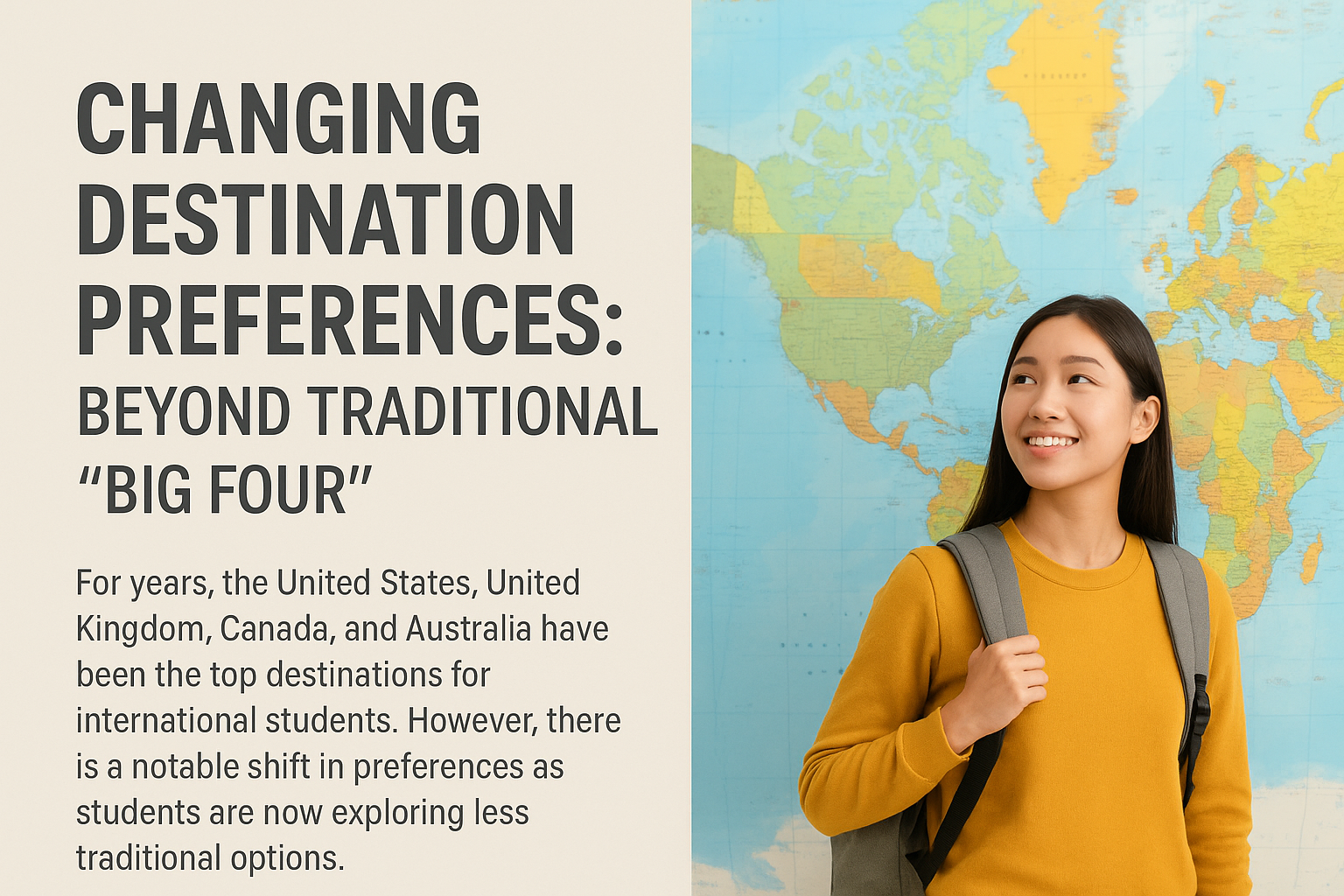
For many years, the United States, the United Kingdom, Canada, and Australia dominated the study-abroad landscape. These destinations built their reputations on strong academic institutions, accessible post-study work opportunities, and well-established international student communities. However, recent trends show a clear transition: students are actively exploring countries beyond these four traditional hubs. By late 2025, this diversification has intensified, driven by affordability concerns, shifting immigration policies, and a strong emphasis on return on investment.
This change is reshaping global mobility patterns and presenting students with more balanced, cost-effective, and career-aligned choices.
1. Why Students Are Expanding Beyond the Big Four
Affordability and Value
Tuition fees and living expenses in the Big Four have risen significantly over the past five years. At the same time, many European and Asian countries now offer high-quality education at lower cost, with some public universities charging minimal or no tuition fees. Students are increasingly evaluating destinations based on overall return on investment instead of reputation alone.
Immigration and Policy Stability
Visa rules, dependent policies, and post-study work rights in major destinations have undergone frequent revisions. Students are now placing greater emphasis on predictable immigration processes. Countries offering stable, transparent policies are gaining preference among applicants seeking long-term settlement or career opportunities.
Access to English-Taught Programs
The expansion of English-taught programs outside anglophone countries has widened student choice. Institutions in Germany, France, Italy, Spain, Japan, the UAE, and South Korea now offer full degree programs in English, reducing language barriers and increasing accessibility.
2. Europe’s Rising Position as a Study Hub
Germany
Germany remains one of the top alternative destinations. Public universities offer excellent education with very low tuition costs. Engineering, computer science, applied sciences, and business programs continue to attract strong interest. The country also offers clear pathways to post-study work and skilled migration.
France
France has increased the number of English-taught master’s programs and has invested heavily in research and innovation. Competitive tuition fees, strong cultural appeal, and graduate employment opportunities make it a practical option for international students.
Spain and Italy
These countries appeal to students interested in business, hospitality, tourism, fashion, and design. Their moderate cost of living and expanding international student support systems contribute to growing demand.
Ireland
An English-speaking European nation with strong ties to global tech companies, Ireland offers a robust job market for graduates in computing, data, AI, and finance. Its post-study work rights add to its attractiveness.
3. Asia: A Consolidating Alternative
Asian destinations have become increasingly prominent as students prioritize proximity to home, quality education, and affordability.
Japan
Japan’s emphasis on internationalizations, scholarships for global students, and high-quality STEM programs has expanded its appeal. The country’s safe environment and strong research culture make it a competitive option.
South Korea
With rising global influence in technology, entertainment, and innovation, South Korea offers English-taught programs, funded opportunities, and increasing international student support.
Singapore and UAE
These countries offer globally recognized institutions, strong infrastructure, excellent safety standards, and high employability rates. They are becoming preferred destinations for students seeking premium education without long program durations.
4. Key Factors Driving These Shifts
Return on Investment (ROI)
Students are now more analytical, comparing tuition, cost of living, employability rates, and post-study work rights across countries. Destinations that offer better ROI are rising in popularity.
Industry Alignment
Program choices increasingly align with growing sectors such as:
Artificial intelligence
Data science
Sustainability and climate
Healthcare technology
Biotechnology
Finance and analytics
Countries investing heavily in these fields are attracting career-focused applicants.
Flexibility and Predictability
Predictable visa policies, faster processing times, and structured pathways to work or residency significantly influence destination choice. Students prioritize countries offering clarity and long-term prospects.
5. What This Means for Students
The expansion of preferred destinations offers students several advantages:
More options within a reasonable budget
Access to high-quality programs without the competition intensity of the Big Four
Better alignment between academic choices and global industry requirements
Opportunities for cultural exposure and diverse international experiences
Students can now select countries based on academic relevance, financial planning, and career goals rather than defaulting to traditional hubs.
To get the right information and would like to apply to any of the above destinations, connect with @Unigro Edu Consultants .